Sharpening Stones & Knife Accessories
Understand “grit” before buying a whetstone
Grit is a measure of how fine a stone is
- A low grit means a coarse stone. It removes a lot of metal from the knife at a time, so the knife gets sharp quickly, but the edge is less refined
- A high grit means a fine stone. It removes only a little metal at a time, so the knife gets sharp slowly, but the edge is much finer
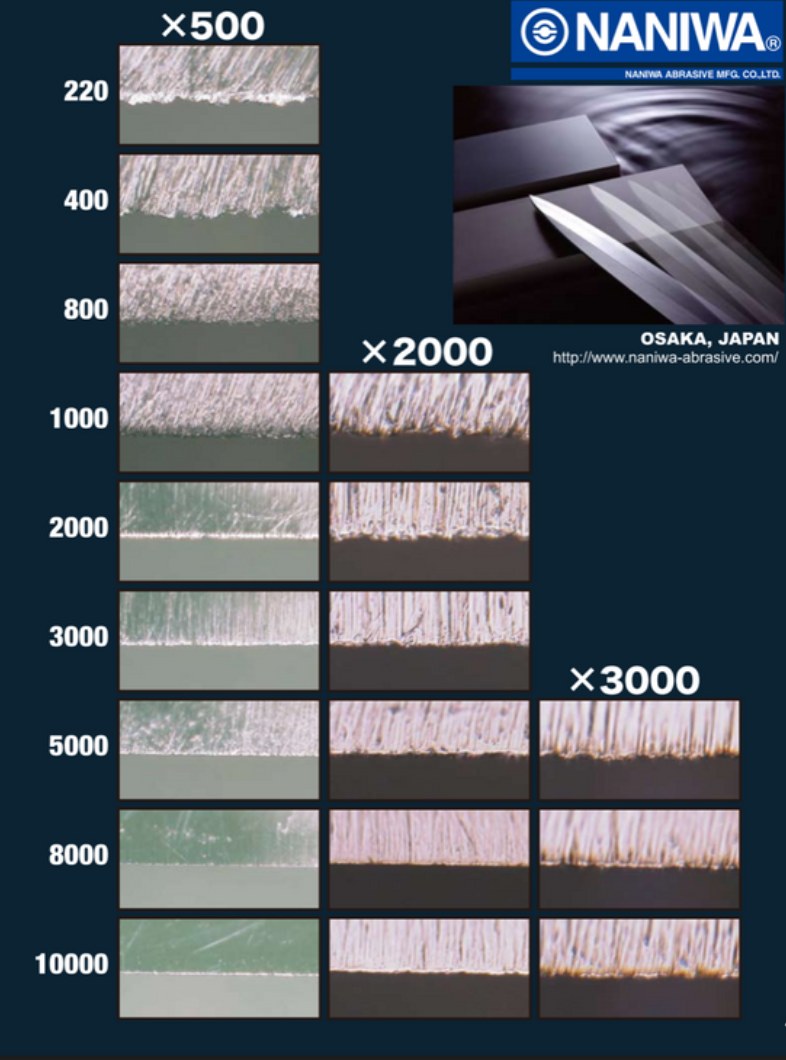
The images on the left show knife edges at x500, x2000 and x3000 magnification after sharpening with stones of different grits: 220, 400, 1000, 2000, 3000, 5000, 8000 and 10000
What this chart tells us is that the higher the grit number, the finer the knife edge
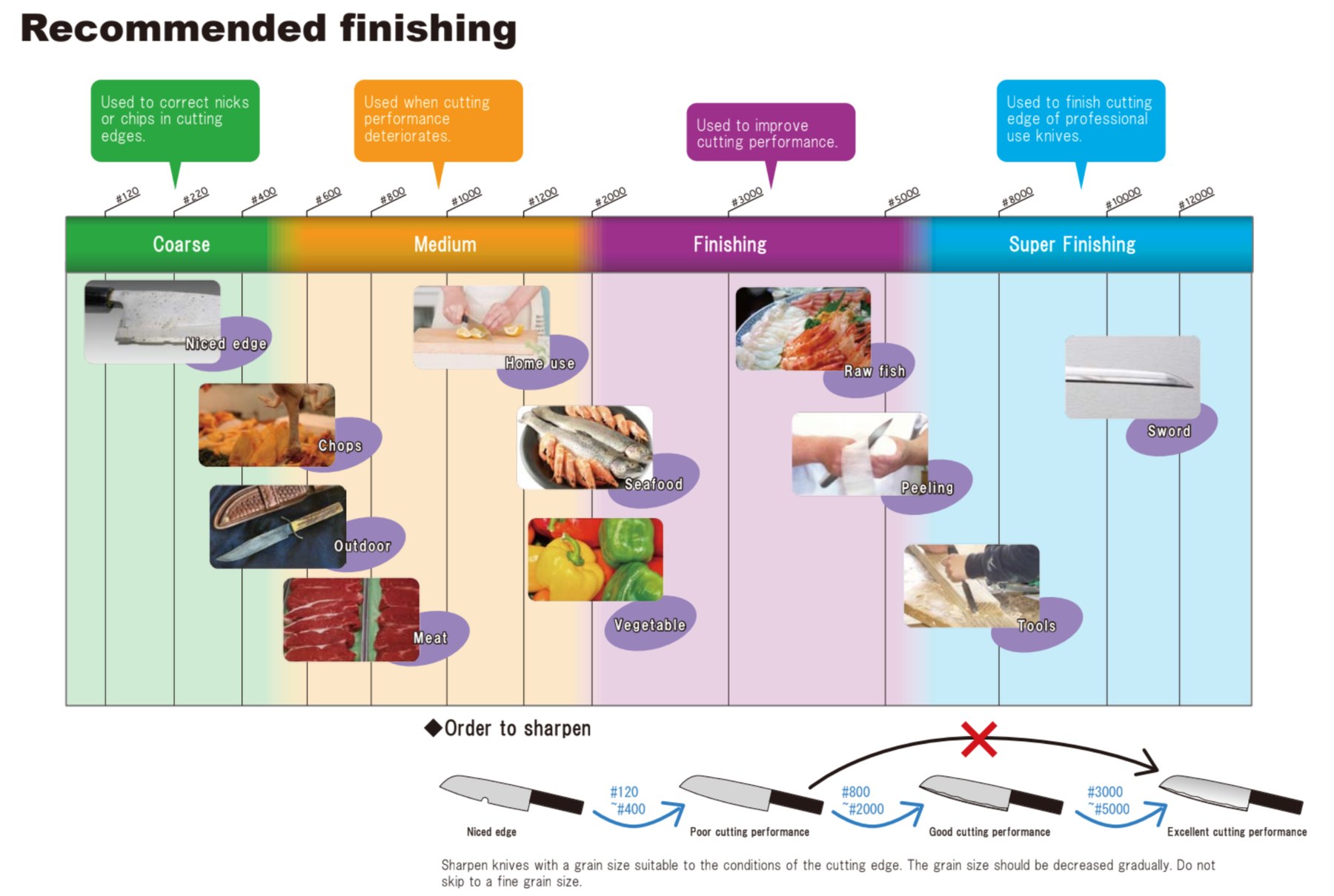
If your knife has lost a lot of its edge, use a low-grit stone to remove plenty of metal and restore sharpness quickly, then move to finer stones until you reach the sharpness you want
If your knife has lost a lot of its edge but you use a fine stone, only a little metal is removed, so it takes much longer than it should — sometimes so long that you may think the stone can no longer sharpen it
So the takeaway from this chart is: choose a stone that suits your knife and the sharpness you need
Sharpness from whetstones falls into 4 levels
- Coarse (0–599 grit) for repairing damaged knives, rough chopping, or heavy-impact work such as chopping bones
- Medium (600–1999 grit) general use with no special purpose falls into this level, whether home cooking or butchering fish (1000 grit)
- Fine (2000–5000 grit) for knives that need a very sharp edge, such as slicing vegetables, peeling fruit skin thinner than 1 mm, or slicing sashimi (4000–6000 grit)
- Extra fine (5001–12000 grit and up) for carpentry tools, sharpening samurai swords, and hobby use
How to sharpen a knife
Here are two clips. One is courtesy of Naniwa, one of the world's best Japanese whetstone makers, who kindly let us translate it into Thai. The other is from Tojiro, which covers every step in detail with close-up shots that help you understand the finer points of sharpening. Both are very easy to follow.