Masamoto Honkasumi Yanagiba
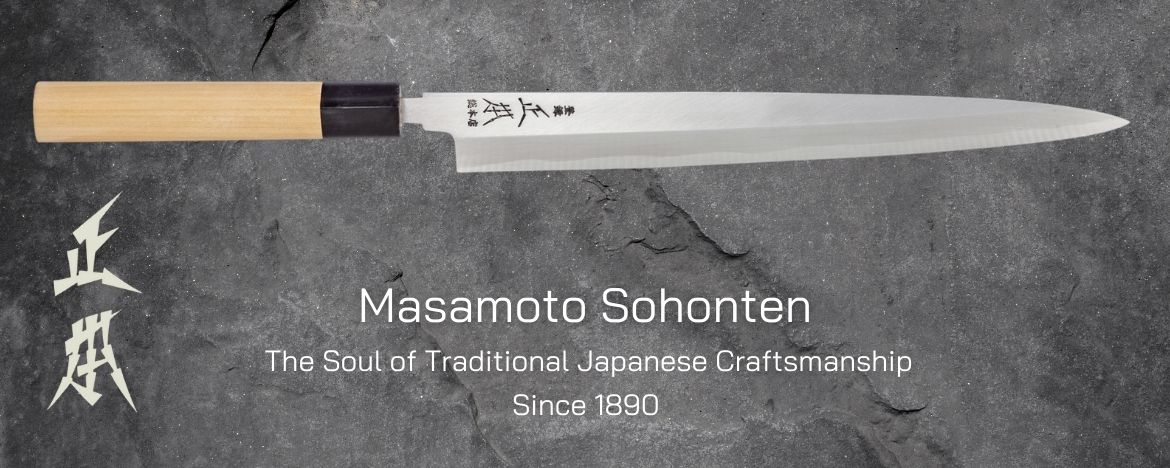
There is no Japanese chef who doesn't know the name Masamoto. Today we'll tell the story of where Masamoto came from and why it became so famous, ranked number one as asushi knifebrand — one of the very best, and part of the “3 M” group: Masamoto, Misono and Masahiro
It began with master Minosuke Matsuzawa, born into a family of knife smiths in Saitama Prefecture, who was determined to make the best sushi knife. He spent many years gaining knowledge and testing again and again, and in 1874 he opened the first forge for cooking knives in the Kanto region. In 1890 he received an order from the office in charge of food and banquets at the Imperial Palace, but at that time the Masamoto name was not yet in use; it was registered in 1903. Sadly, Minosuke Matsuzawa had no son to inherit the business, so he handed it to his apprentice, Kichizo Hirano. From then on, Masamoto belonged to the Hirano family. By the third generation (the second generation of the Hirano family), one of the successors founded a shop at the Tsukiji fish market, separate from Masamoto Sohonten (Sohonten means the head store, located in Azumabashi).
That's why many people who visit Japan come across a Masamoto knife shop at Tsukiji fish market, but you often hear that it isn't the real thing. The truth is just as described above. Saying it isn't genuine goes too far, but it's also hard to define exactly. In any case, the Masamoto we sell is Masamoto Sohonten, the only one with the right to use the Masamoto trademark. It uses Shirogami No. 2 steel (anything harder would be very difficult to sharpen because the steel is so hard), which Masamoto calls by its own term, Gyokuhaku-ko, and it is made by top-level Honkasumi craftsmen (ordinary craftsmen's work is called Kasumi). In short, Hachanna has already selected the most suitable Masamoto model in every respect for you.